
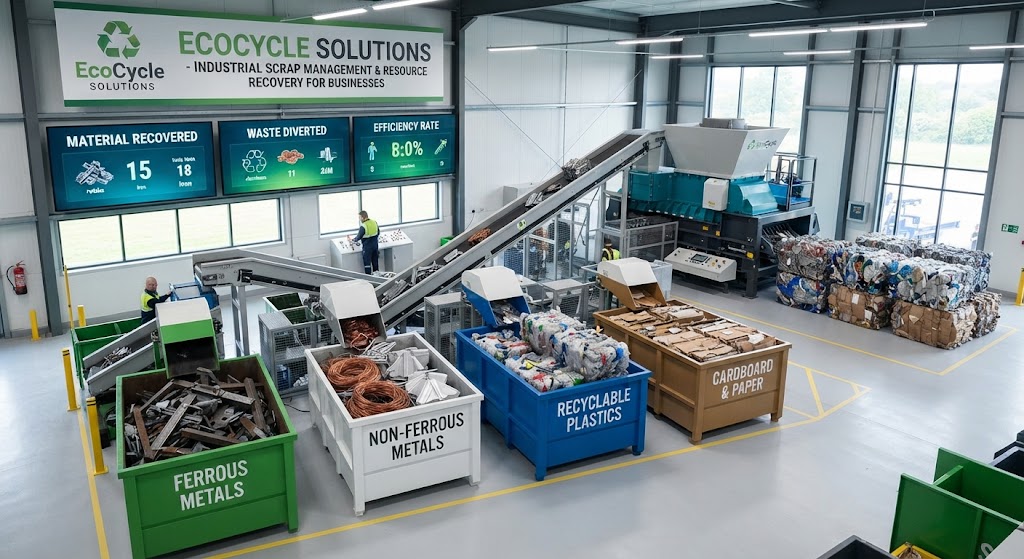
Industrial scrap is generated across many manufacturing, engineering, fabrication, construction, maintenance and commercial activities. When scrap is not properly segregated, stored and managed, businesses can lose recoverable material while also creating unnecessary handling, storage and disposal challenges.
A structured scrap management system can help businesses identify recyclable materials, improve workplace organization, reduce avoidable waste and support better resource recovery.
What Is Industrial Scrap Management?
Industrial scrap management is the organized process of identifying, segregating, collecting, storing, handling and directing scrap materials toward appropriate recovery, recycling or disposal channels.
The exact approach depends on the type of material, quantity generated, site conditions, business operations and applicable requirements.
Industrial scrap management means treating scrap as a managed material stream rather than allowing different waste materials to become mixed, misplaced or unnecessarily discarded.
Why Is Scrap Management Important for Businesses?
Poorly managed scrap can occupy valuable floor space, interfere with material movement and create unnecessary handling work.
Better segregation and storage can make material identification easier and may help businesses recover greater value from suitable recyclable materials.
- Better utilization of storage areas
- Improved material segregation
- Easier identification of recyclable materials
- Better housekeeping and workplace organization
- Reduced mixing of different material streams
- Improved visibility of generated scrap
- Potential improvement in scrap recovery value
Common Types of Industrial Scrap
Industrial and commercial sites can generate many different types of scrap. The materials should be identified and segregated according to their actual characteristics and applicable handling requirements.
Metal Scrap
Metal scrap can include ferrous and non-ferrous materials such as steel, mild steel, stainless steel and other recoverable metal streams.
Plastic Scrap
Plastic scrap may include materials such as LDPE, HDPE, PP, PVC and mixed plastic streams, depending on the operations generating the material.
Paper and Cardboard Scrap
Offices, warehouses, manufacturing facilities and commercial operations can generate cardboard, packaging paper and other recoverable paper waste.
Other Material Streams
Certain businesses may also generate other scrap streams. These should be assessed separately because their handling, storage, recovery and regulatory requirements may differ.
The Basic Scrap Management Process
A practical scrap management system can be organized into several connected stages.
Identify
Identify the different scrap materials generated by each production, maintenance or commercial activity.
Segregate
Keep suitable material streams separated so that recoverable materials are not unnecessarily mixed.
Store
Establish suitable and clearly identified storage areas for different scrap categories.
Record
Maintain appropriate records of quantities, movements and transactions according to the business requirement.
Recover
Direct suitable recyclable materials toward appropriate recovery or recycling channels.
Review
Periodically review scrap generation, segregation, storage and recovery performance.
How Proper Segregation Can Improve Scrap Recovery
Mixing different materials can make identification, handling and recovery more difficult. A simple segregation system can help employees understand where each material should be placed.
For example, metal scrap, plastic scrap and paper or cardboard can be collected separately where appropriate. Clear identification of collection points can also support better workplace discipline.
Make the correct disposal point easy to understand. Clear labels, designated areas and simple operating instructions can make segregation easier for employees.
Scrap Storage and Workplace Organization
Scrap storage should be planned rather than treated as temporary dumping space.
Businesses should consider factors such as available space, material identification, access for handling, housekeeping, movement of people and equipment, and applicable safety requirements.
Well-organized storage can also support 5S principles by reducing unnecessary accumulation and making material locations easier to identify.
Documentation and Scrap Records
Maintaining suitable records can help businesses understand how much scrap they generate and where the material goes.
Depending on the business activity, useful information may include:
- Type of scrap material
- Approximate or measured quantity
- Source or department generating the material
- Collection or movement information
- Dispatch or transaction records
- Relevant invoices and supporting documents
How Businesses Can Reduce Scrap Generation
Scrap management should not focus only on what happens after scrap is generated. Businesses can also examine opportunities to reduce avoidable scrap at the source.
Production teams can review recurring scrap patterns, cutting losses, damaged materials, rejected components, packaging waste and other avoidable sources.
Simple root-cause analysis can help identify whether a particular scrap stream is caused by process variation, material handling, storage conditions, machine settings, quality issues or other operational factors.
Recycling and Resource Recovery
Once scrap is properly identified and segregated, suitable materials can be directed toward appropriate recycling or recovery channels.
The recovery route depends on the material, quality, quantity, market conditions and applicable requirements. Businesses should use appropriate channels for the specific material involved.
For businesses handling non-hazardous recyclable scrap, organized collection, trading and recycling arrangements can form part of a broader resource-efficiency strategy.
How EcoCycle Solutions Can Support Scrap Management
EcoCycle Solutions supports businesses with non-hazardous scrap trading and recycling-related requirements within the applicable scope of the activity.
Our scrap-related activities include handling suitable paper, plastic and metal scrap streams, with material segregation and recovery approaches based on the specific requirement.
Our broader environmental and sustainability consulting services can also support businesses looking to improve waste management practices, workplace organization and resource-efficiency initiatives.
Any activity requiring specific registrations, consents, authorizations or other regulatory requirements should be undertaken only after the applicable requirements have been fulfilled.
Key Takeaways
- Industrial scrap should be treated as a managed material stream rather than unmanaged waste.
- Segregation can make recyclable materials easier to identify and recover.
- Clearly designated storage areas can improve workplace organization.
- Suitable records help businesses understand scrap generation and movement.
- Businesses can examine opportunities to reduce avoidable scrap at the source.
- Recovery and recycling routes should be selected according to the material and applicable requirements.
Frequently Asked Questions About Industrial Scrap Management
What is industrial scrap management?
Industrial scrap management is the organized identification, segregation, storage, handling, recording and recovery of scrap materials generated by business operations.
Why is scrap segregation important?
Segregation can help businesses identify different materials more easily and reduce unnecessary mixing of recoverable material streams.
What types of scrap can businesses generate?
Common examples include metal, plastic, paper and cardboard scrap. The exact materials depend on the business activity and process.
Can scrap management help reduce waste?
A structured system can help businesses identify avoidable scrap, improve segregation and direct suitable materials toward recovery or recycling.
Does EcoCycle Solutions handle industrial scrap?
EcoCycle Solutions supports non-hazardous scrap trading and recycling-related activities within the applicable scope of its services.
Related EcoCycle Solutions Services
Explore related EcoCycle Solutions services for recycling, environmental management and workplace improvement.