
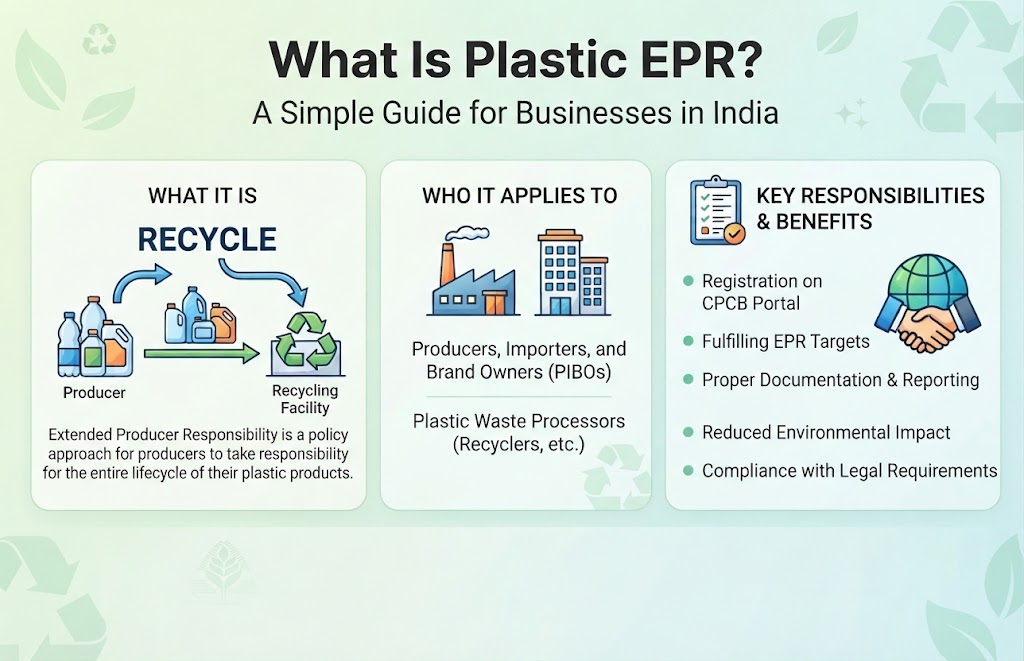
Plastic waste management has become an important part of responsible business operations in India. For businesses involved with plastic packaging and related activities, understanding Extended Producer Responsibility (EPR) is increasingly important.
This guide explains Plastic EPR in simple language and highlights some of the important areas businesses should understand before managing their compliance responsibilities.
What Is Plastic EPR?
Extended Producer Responsibility, commonly called EPR, is a policy approach under which certain businesses may have responsibilities connected with the environmental management of products or packaging introduced into the market.
In the context of plastic packaging, EPR is intended to support responsible collection, recycling, processing and environmentally sound management of plastic waste through the applicable regulatory framework.
Plastic EPR connects the introduction of specified plastic packaging into the market with responsibilities for managing the corresponding plastic waste through the applicable system.
Who May Have Plastic EPR Responsibilities?
Depending on the applicable regulatory framework and the business activity, EPR responsibilities can apply to different categories of entities involved with plastic packaging.
Commonly discussed categories include Producers, Importers and Brand Owners (PIBOs), while Plastic Waste Processors have separate roles within the EPR ecosystem.
Businesses should determine their applicable category and obligations based on their actual activities and the current requirements of the relevant authorities.
Why Is Plastic EPR Important?
Plastic EPR is designed to encourage more structured management of plastic packaging waste and greater accountability across the plastic value chain.
For businesses, understanding EPR can help bring greater structure to areas such as registration, data management, documentation, recycling-related records and regulatory reporting.
What Should Businesses Keep Track Of?
One of the most important practical aspects of compliance is maintaining accurate information and supporting records.
Depending on the applicable requirements, businesses may need to organize information relating to plastic packaging, quantities, transactions, recycling activities and other relevant compliance records.
- Plastic packaging quantities and relevant categories
- Purchase and sales-related documentation where applicable
- Recycling and processing records
- Supporting invoices and transaction documents
- EPR-related registration and reporting information
- Other records required under the applicable framework
EPR Compliance Requires Proper Documentation
EPR compliance is not simply about completing an online registration or filing. The underlying business data and supporting documentation are also important.
A structured documentation system can make it easier to track quantities, transactions, recycling-related information and reporting requirements.
Keep your business records organized throughout the year rather than trying to reconstruct all compliance information at the time of annual reporting.
How EcoCycle Solutions Can Support Businesses
EcoCycle Solutions provides EPR compliance and consultation support for businesses seeking practical assistance with plastic waste management and EPR-related processes.
Our approach focuses on understanding the client's business activity, organizing relevant information, supporting documentation and helping businesses understand the applicable compliance process.
Regulatory requirements can change. Businesses should always refer to the latest applicable requirements and official guidance before making compliance decisions.
Key Takeaways
- Plastic EPR is part of the regulatory framework for managing specified plastic packaging responsibilities.
- Different entities can have different roles and responsibilities within the EPR system.
- Accurate quantity and transaction records are important for organized compliance management.
- Supporting documentation should be maintained systematically.
- Businesses should verify current regulatory requirements before filing or taking compliance decisions.
Frequently Asked Questions About Plastic EPR
What does EPR mean in plastic waste management?
EPR stands for Extended Producer Responsibility. It is a policy approach that assigns specified environmental responsibilities to relevant entities connected with products or packaging.
Who needs to understand Plastic EPR?
Businesses whose activities fall within the applicable Plastic Waste Management and EPR framework should understand their relevant responsibilities and registration or reporting requirements.
Why is documentation important for EPR?
Documentation helps businesses maintain traceable information relating to quantities, transactions, recycling activities and other compliance records.
Can EPR requirements change?
Yes. Regulatory requirements, procedures and reporting systems can be updated. Businesses should refer to the latest applicable official requirements.
Related EcoCycle Solutions Services
Explore our related services for businesses working toward better waste management, environmental responsibility and operational sustainability.